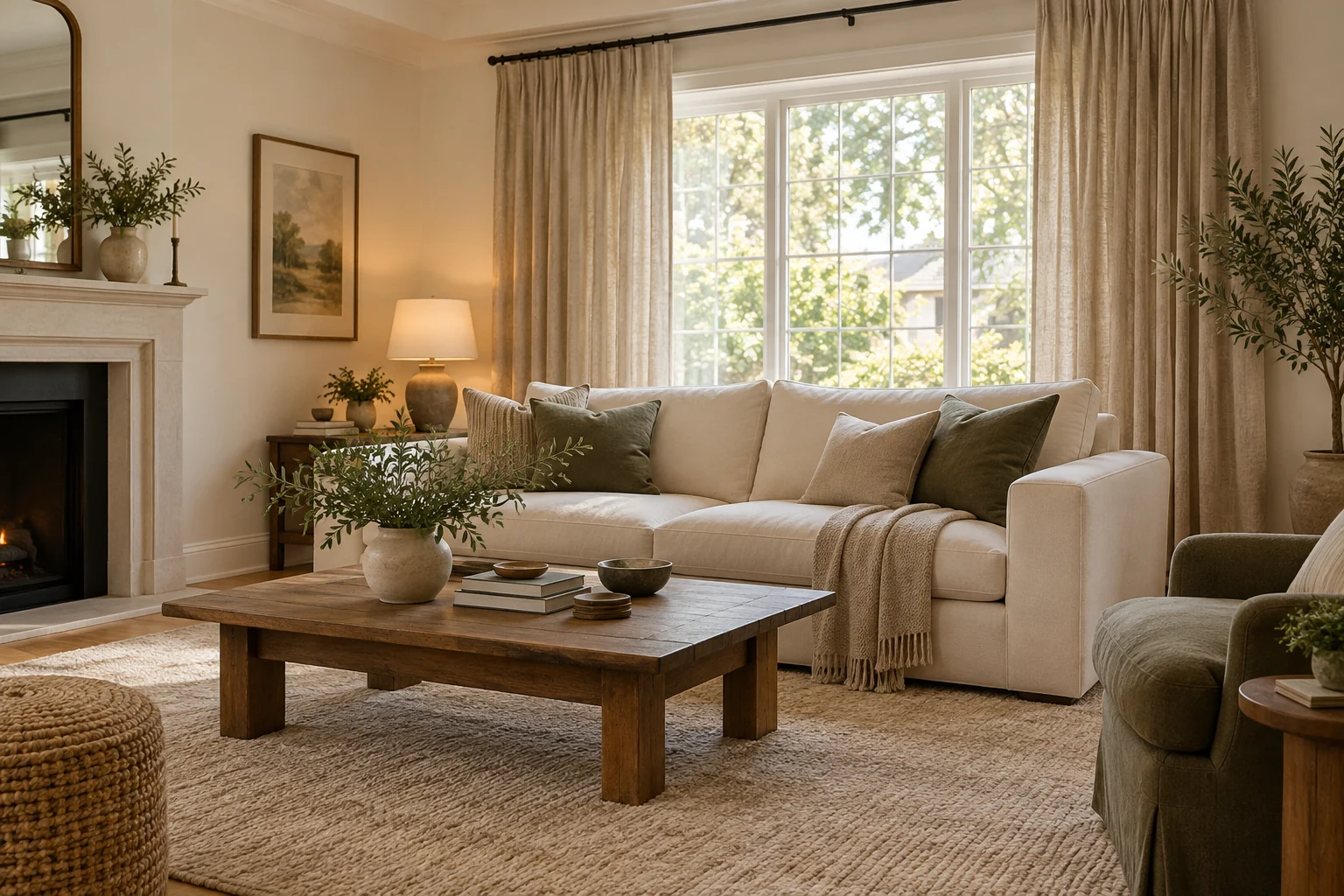
You know the feeling when you walk into a room and everything seems to belong. The lighting is soft, the curtains fall beautifully, and even the objects on the coffee table feel thoughtfully placed. Nothing competes for your attention, yet there is plenty to notice.
That sense of ease comes from the way a room is put together. Color, proportion, texture, and lighting all influence how finished a space feels—and several of the most useful improvements begin with what you already own.
If you want to make your home look expensive on a budget, start by identifying what feels unresolved. Perhaps the room needs a warmer glow in the evening, a more generous curtain panel, or artwork that gives an empty wall some purpose. One considered change can do more than a cart full of accessories.
Here are seven ways to bring that approach home.
1. Give the room a clear color direction
A room feels more cohesive when its colors have something in common. Start with your largest existing pieces—the sofa, flooring, cabinetry, or bed—and choose a palette that works with them.
For a warm, restrained living room, that might mean cream, oatmeal, and wood tones, with olive or charcoal appearing in smaller accents. Repeat the accent in a few places: a cushion, a detail in a print, and a ceramic bowl. The repetition gives the eye a connection to follow.
You can achieve this without replacing your furniture. Move accessories between rooms, edit out pieces that interrupt the palette, and see whether a different cushion cover brings the sofa into the scheme. Leave space for meaningful objects and a little variation; a home can feel cohesive without every item matching.
2. Make your curtains feel intentional
Window treatments occupy a large area of a room, so their proportions matter. Curtains that look sparse or stop awkwardly above the floor can make an otherwise lovely space feel unfinished.
Where your windows and walls allow, position the rod above the window frame and extend it far enough for the open panels to sit mostly beside the glass. Measure before buying: account for the mounting height, the curtain heading, and any rings or hooks. A hem that just clears the floor creates a clean finish and is practical for everyday living.
Look for enough fabric to form soft folds when the curtains are closed. Light-filtering fabric can create an airy daytime effect, while lined panels offer more privacy and a fuller appearance. Choose based on how you use the room as well as the look you want.
An oatmeal or ivory curtain with visible texture is a useful starting point for a neutral scheme. Order a fabric sample when possible, since the undertone can look different beside your walls.
3. Build a softer evening glow
If a room feels inviting during the day but stark at night, look at the lighting before changing the decor.
A table lamp beside the sofa, a floor lamp near a reading chair, or a pair of bedside lamps can create smaller pools of light throughout the space. Use them according to the task: enough illumination to read comfortably, softer light for winding down, and brighter lighting where you need to work.
Bulbs around 2700K are a useful starting point for a warm evening atmosphere. Keep the color temperature consistent among lamps you use together, and check bulb and dimmer compatibility before purchasing.
The fixture itself also adds shape and texture. A substantial ceramic base, a softly pleated shade, or a simple dark metal silhouette can give a room presence while serving a daily purpose. Before buying, measure the surface and check that the lamp leaves room for the things you actually use.
4. Use texture to give neutrals depth
Neutral rooms benefit from variation you can see and feel. A smooth sofa, flat rug, and glossy table may share a beautiful palette, but together they can feel a little one-dimensional.
Introduce a few contrasting surfaces: a woven cushion against upholstery, a softly folded throw beside polished wood, or a matte ceramic vessel on a sleek console. Choose pieces that bring something different to the room.
On a sofa, start with two or three cushion covers in related tones and vary their texture. A small-scale pattern can add interest without taking over. Check the dimensions of the inserts you own before ordering, and consider care requirements if the room gets heavy use.
Replacing covers rather than entire cushions can be a practical way to refresh the space. Once they are in place, pause before adding more; the room may already have the depth it was missing.
5. Choose artwork with the wall in mind
Artwork gives a room personality, but the relationship between the piece and its surroundings is just as important as the image itself.
Above a wide sofa or bed, a small frame can feel disconnected. One larger piece or a closely arranged group can create a stronger connection to the furniture below. Use paper templates or painter’s tape suitable for your wall finish to test the overall size and arrangement before making holes.
Choose art that reflects something you care about. A landscape, architectural study, or vintage-inspired travel print can give a neutral room a sense of place. Repeat a color from the artwork elsewhere in the room to help it settle into the scheme.
Printable artwork offers flexibility in size and framing, though the final cost includes the print, frame, and any matting. Confirm the file’s supported print sizes and compare those costs before choosing a format.
6. Leave room around your favorite objects
A well-styled surface has enough breathing room for its best pieces to register.
Clear a coffee table or console completely, then put back the items you use and the objects you most enjoy. Try a shallow bowl beside a short stack of books, or a taller vase with a smaller object nearby. Vary the height and shape while keeping the arrangement practical.
A tray can gather small everyday items, but it should make the surface easier to use. Leave room for a drink on the coffee table and a clear landing spot for keys in the entryway.
Live with the arrangement for a few days before shopping. Often, moving one object or removing two is the finishing touch the surface needs.
7. Spend on the detail you notice most
Before buying anything, stand in the doorway and ask: what draws my attention for the wrong reason?
If the curtains feel too short, another vase will have little effect. If the room feels cold after sunset, a lamp may be more useful than new wall art. If the seating area lacks definition, check the rug’s proportions before adding more cushions.
Choose one priority and set a complete budget for it. Include the less visible costs: curtain rods and rings, lamp bulbs, rug pads, or printing and framing. Measure carefully and check return terms so the purchase has a better chance of working in your home.
Once that change is in place, reassess. You may find you need fewer finishing touches than you expected.
Start with one thoughtful change
A more elevated home takes shape through choices that work together. A consistent palette brings calm, softer lighting adds warmth, and well-proportioned curtains and artwork help the room feel complete.
Choose the idea that addresses your room’s biggest need and begin there. Take your time with the next layer; a home often becomes more interesting as you discover what deserves a place in it.