This article contains an affiliate link. WESTMONT may earn a commission if you make a purchase through it, at no additional cost to you.
AI-generated room inspiration. Linked products are separate recommendations.
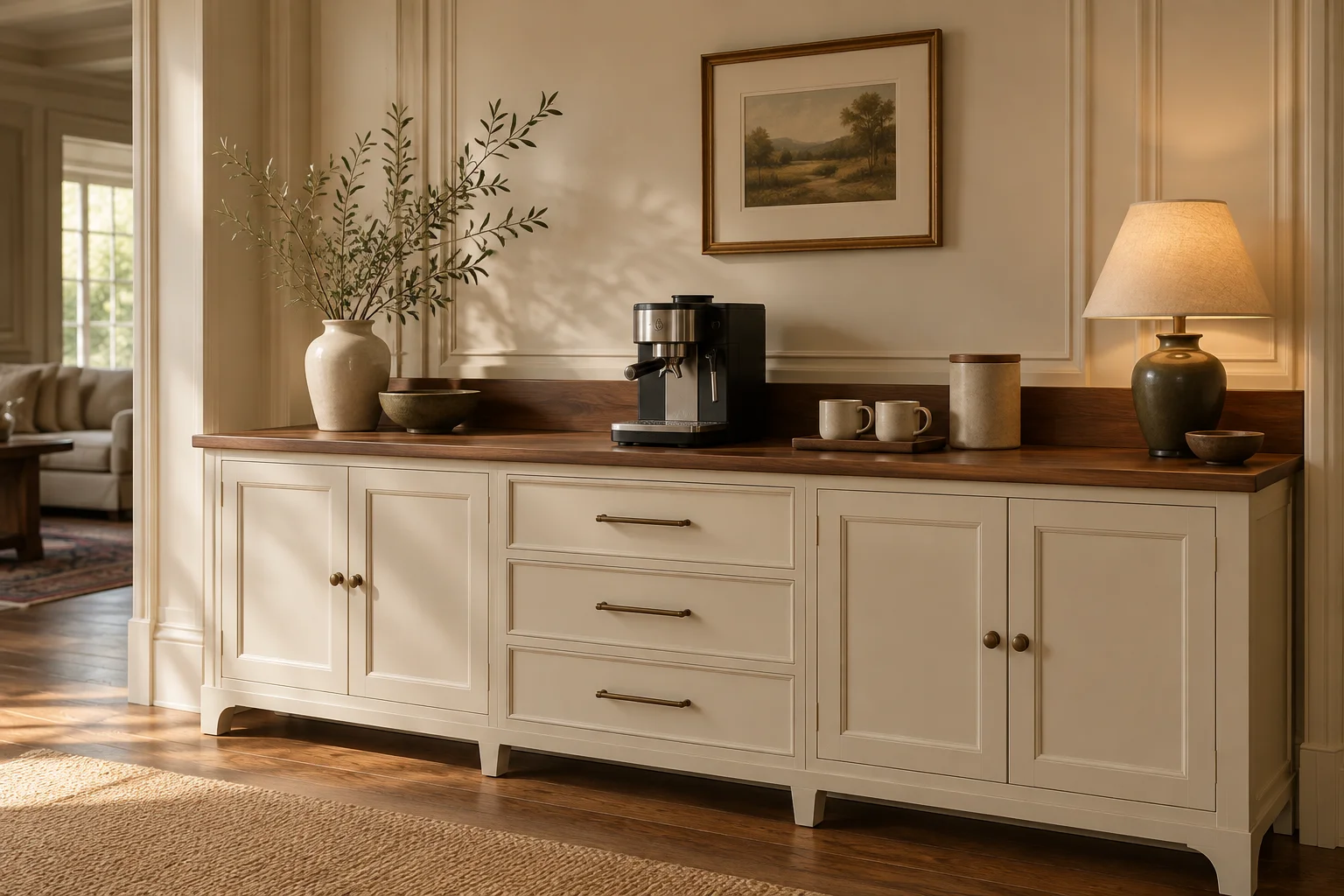
A coffee station can make an everyday kitchen or dining corner feel thoughtfully finished. The appeal is partly practical: cups, coffee, and the machine live together, so the morning routine involves less searching. It also gives a small stretch of wall a clear purpose, particularly when a freestanding cabinet looks as though it belongs with the room around it.
You can create that built-in look without taking on a renovation. Begin with a suitable cabinet or sideboard you already own, then bring the arrangement together through placement, shared finishes, and useful storage. The aim is a coffee corner that feels settled and easy to use, with enough open space to prepare a drink comfortably.
1 Choose a base that belongs in the room
The cabinet is the largest part of the arrangement, so start with its position and proportions. Look for a location near the place you naturally prepare or enjoy coffee, with convenient access to a suitable power outlet if your appliance needs one. Keep the route through the room clear, including space to open doors and drawers without creating an obstacle.
Try an existing sideboard or cabinet before shopping. It needs to be stable, suitable for the weight and use you have in mind, and deep enough for the equipment to sit fully supported. Follow the furniture’s assembly and anchoring instructions. Check that its surface can tolerate the everyday demands of a drinks station, and use appropriate protection if the finish requires it.
Place the coffee maker temporarily and rehearse the routine while it is off. Can you access the water reservoir, lift the lid, remove the drip tray, and set down a cup? Leave the manufacturer’s required space around the appliance. The cabinet may fit the wall beautifully yet still be too shallow or awkward for the machine you use.
If you are planning a larger furniture purchase, the Homsee Home Bar Beverage Storage Station is an investment option to compare with your available space and storage needs. Check its current dimensions, materials, assembly requirements, and the clearance your appliances require before ordering. A new beverage cabinet is optional; a well-positioned piece you already own can provide the same starting point for a composed coffee corner.
To help a freestanding base feel connected to the room, echo a finish that is already nearby. A dark cabinet might relate to dining chairs, while a pale one could sit comfortably beside lighter kitchen cabinetry. Exact matching is unnecessary. Look for a combination that feels deliberate when viewed from the main entrance to the room, then check it again in the light you have each morning.
2 Make the wall and cabinet feel like one arrangement
A cabinet can look isolated when the wall above it feels unrelated. Bring the two together with a clear focal point centered over the useful part of the station. An existing framed print is often enough. Choose something whose colors relate to the cabinet or surrounding room, then test the height visually before making holes in the wall.
A shelf is another possibility when you need accessible cup storage and the location is suitable. Check the wall construction, fixing requirements, and the shelf’s load guidance before installing it. Keep anything above an appliance outside the manufacturer’s required clearances and away from heat, steam, and splashes. If that leaves too little room, use artwork elsewhere or leave the wall open.
Give the arrangement a visible relationship without filling every gap. A frame that feels proportionate to the cabinet, a tidy group of cups, and a little open counter space can look more settled than a dense collection of accessories. Look at the whole wall rather than considering each object separately. The empty space around the station helps it read as a complete area.
Repeat one or two familiar materials in small ways. A wooden tray may relate to a nearby table, while a ceramic container could pick up the color of your everyday mugs. If the machine has a prominent black finish, a dark frame elsewhere in the arrangement can help it feel less visually isolated. Use objects you already have before deciding another accessory is necessary.
Avoid enclosing a working coffee maker simply to imitate fitted cabinetry. An appliance needs the ventilation and operating space specified by its manufacturer, including room for steam and moving parts. Keep it on a suitable open surface, and do not conceal electrical connections where they become difficult to access. A built-in appearance can come from alignment and repetition while the equipment remains safely accessible.
3 Organize around the drink you actually make
Empty the cabinet and think through a normal morning. You might need beans, a grinder, a spoon, and one favorite mug. Someone else may use a kettle, a filter holder, and a small jar of tea. Let your routine determine what stays within reach rather than arranging the station around a photograph of somebody else’s kitchen.
Keep the most frequently used items near the preparation area. A small tray can gather loose accessories if it is stable and leaves enough room to work. Use a suitable container for coffee, following the packaging’s storage advice. Store cleaning products separately from cups and food, and give the appliance’s cleaning tools a place that is easy to remember.
Use closed storage for the things that make the surface feel crowded. Extra mugs, spare filters, and occasional serving pieces can live behind doors or inside drawers. Reuse small boxes or organizers where they fit well, without forcing every compartment into a matching system. You should be able to find what you need without unpacking the entire cabinet.
Leave a clear landing place for a cup and enough space for refilling and cleaning. Keep appliance cables away from water and hot surfaces, and follow the manufacturer’s electrical instructions. If the only workable location depends on an unsuitable power arrangement or cramped clearances, choose another spot rather than disguising the problem with styling.
Use the station for a few days before adding finishing touches. You may discover that the cups belong on the opposite side, that a decorative tray gets in the way, or that the spare supplies need a lower shelf. For a similar approach nearby, see our guide to making a dining room look expensive without overspending. Once the routine feels easy and the cabinet relates to its surroundings, the coffee station will have the settled quality you were after.