This article contains an affiliate link. WESTMONT may earn a commission if you make a purchase through it, at no additional cost to you.
AI-generated room inspiration. Linked products are separate recommendations.
A home office can feel unfinished even when it has everything you need to work. The desk may be perfectly serviceable, yet the cables, spare boxes, and unrelated accessories around it make the whole space look temporary. Buying a new set of furniture is an expensive way to avoid looking closely at what is already there.
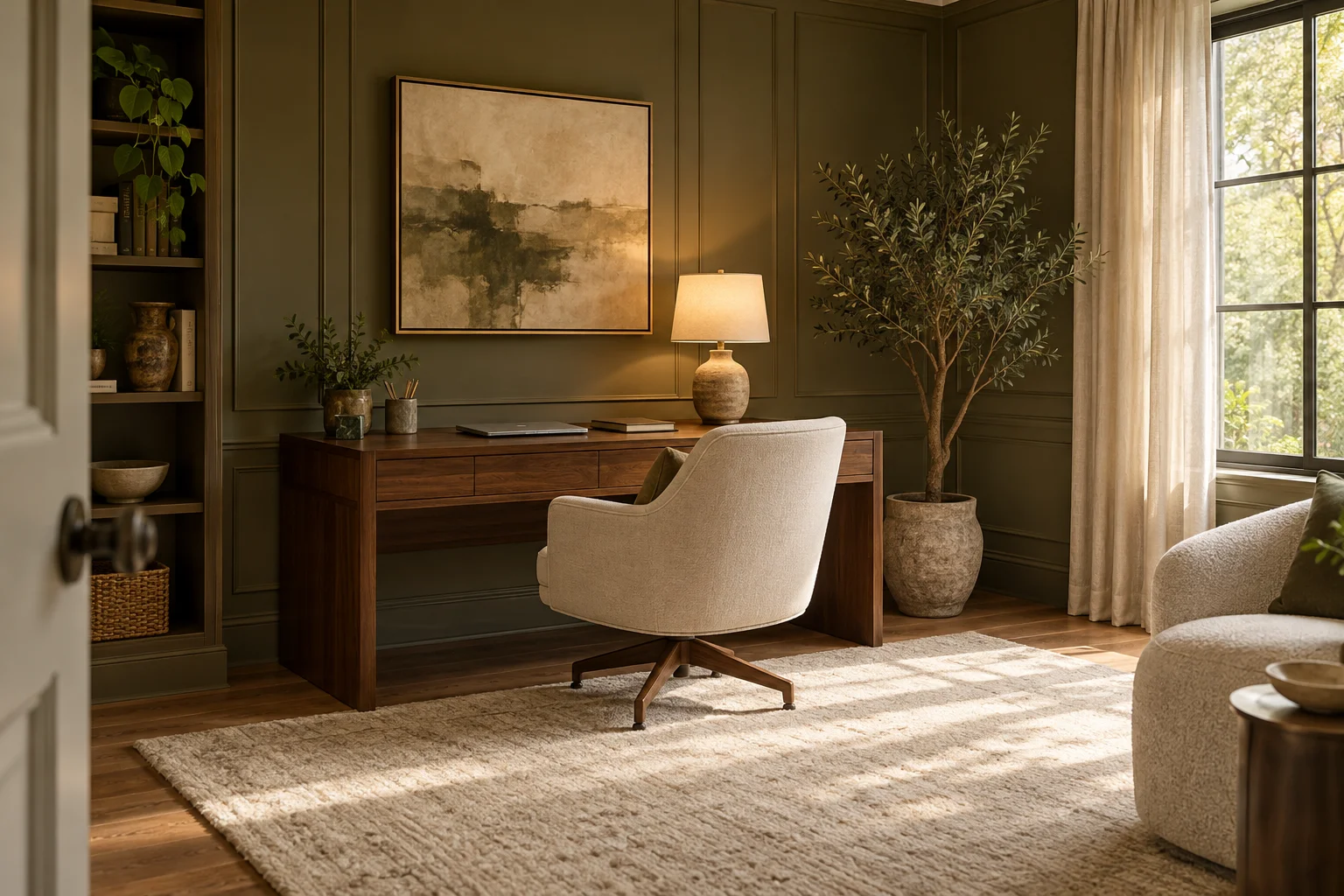
Start by noticing the view you see most often. It might be the office doorway, the corner of your living room, or the background on a video call. A calmer arrangement, a little consistency in the finishes, and lighting that makes the room pleasant to use can give an ordinary workspace a more considered feeling. The best changes also make the working day easier.
1 Let the desk give the room a clear center
First, clear the desk and look at its position. Does it have enough room around it to feel intentional? Can you pull the chair out comfortably and open nearby cupboards? Try a different placement before deciding the desk itself is wrong. A small shift may improve both the view from the door and the way you move through the room.
Keep the working surface generous enough for your actual setup. If you use a monitor, keyboard, and notebook every day, arrange those first. Add decorative objects only after the essential equipment has a comfortable place. A desk looks more composed when the objects on it fit without crowding each other.
If you are furnishing a workspace from scratch, the Homsee Oval-End Office Desk is one option to consider for its rounded outline. Compare its current measurements and product specifications with your room, equipment, and storage needs before committing. Its shape may appeal to you, but the useful test is whether you can work comfortably with everything in place.
An existing rectangular desk can look equally considered. Give it a clean perimeter, position it carefully, and repeat one of its finishes elsewhere in the room. That might be a wood tone in a picture frame or a dark detail in a lamp. A clear visual connection can do more than adding several unrelated statement pieces.
2 Make everyday storage quieter and easier to use
Home offices collect objects from several parts of life. Receipts, charging leads, school papers, and half-finished projects can all end up beside the keyboard. Before buying storage, separate what you use daily from what simply needs somewhere to live. The desk should not have to carry every category at once.
Use the drawers, cabinets, and shelves already available. Put frequently used supplies within easy reach, then give occasional items a less prominent place. A small tray inside a drawer can gather loose stationery. An existing box can hold spare cables, provided you can tell what is inside without emptying it each time.
On open shelves, mix practical storage with a little empty space. Group a few related books together and leave room around them. If packaging is visually noisy, move it into a cupboard or reuse simple boxes that fit safely on the shelf. You do not need an entire matching collection to make the arrangement feel calmer.
Deal with cables as part of the working setup. Route them away from feet, chair wheels, and drawers; use suitable cable clips where helpful. Keep power equipment ventilated and follow its instructions rather than packing it tightly into a decorative container. Leave enough slack for ordinary movement and access. A tidy office should remain easy to maintain when you unplug a laptop or change your desk position.
3 Bring the finishes into a smaller shared palette
An office can feel visually busy when every object introduces a different finish. A pale desk, bright plastic organizers, several unrelated metallic accents, and a patterned chair may all work individually while feeling unsettled together. Look for a few existing pieces that already get along and use those as your guide.
For a warm, restrained workspace, you might keep cream, brown, and a small amount of black in view. Another room may suit soft gray, muted green, and darker wood. These are starting points rather than rules. The colors should relate to your furniture and the adjoining rooms, especially if the office occupies part of a bedroom or living room.
Move the easiest pieces first. A frame from another room might suit the desk better than the one currently on it. A plain notebook you already own may look quieter beside a busy monitor setup. Keep favorite personal objects, but give them enough space that you can appreciate them.
Texture can bring variety without adding more colors. A fabric shade, a wooden frame, or a small woven basket may soften the contrast with screens and office equipment. Add only what the space can use. Repetition should make the room feel connected, with enough variation to keep it personal and comfortable.
4 Give the room lighting beyond the ceiling fixture
A single ceiling light can leave an office feeling flat, especially after dark. Begin with the task in front of you. Use a lamp to illuminate paperwork or the part of the desk where you write, and check the position from your normal seat. A shade that looks elegant from the doorway may still put a bulb directly in your view.
Notice the screen as you move the lamp. Reflections and glare can make an otherwise attractive arrangement frustrating. Adjust the position of the light, screen, or desk until the setup feels workable. If daylight creates a similar problem, try the window covering you already have before adding anything new.
A second lamp elsewhere in the room can soften the transition between the desk and its surroundings, if you already have one to borrow. It might sit on a cabinet or shelf with suitable space and a safe route for the cord. Check the room in the evening, when differences between light sources are easier to notice.
Choose compatible bulbs within each fixture’s guidance and judge the result in your own space. The aim is clear, comfortable light for the work you do, with a room that still feels welcoming after sunset. There is little benefit in creating an atmospheric office if you then struggle to read the page in front of you.
5 Edit the view and finish with something personal
Stand at the doorway again and look at the whole arrangement. You may notice that a large frame belongs slightly closer to the desk, that a stack of boxes draws attention away from the room, or that the chair needs more space around it. Make one change at a time and step back before adding another.
Keep the chair that supports your working needs, even if a decorative occasional chair looks prettier in photographs. Adjust the available setup to suit you and keep essential equipment within comfortable reach. An office should feel good during a normal working day, not just for the few seconds it takes to photograph it.
Choose one personal detail you enjoy seeing. A print, a small piece of pottery, or a photograph can give the room warmth without turning the desk into a display shelf. If you take video calls, check the actual camera view rather than styling a wall the camera never sees. Keep private paperwork out of that frame.
Finish with a short reset at the end of the day. Put loose papers where they belong, return supplies, and leave a clear place to begin tomorrow. For more room-wide ideas, our guide to making your home look expensive without overspending explores similar choices in proportion and finishing. The most convincing office is one whose details belong together and whose everyday mess has somewhere sensible to go.