This article contains an affiliate link. WESTMONT may earn a commission if you make a purchase through it, at no additional cost to you.
AI-generated room inspiration. Linked products are separate recommendations.
An empty corner is easy to overlook until you imagine spending a quiet hour there. Perhaps it catches the afternoon light, sits beside a bookcase, or feels slightly removed from the busiest part of the room. With a comfortable seat and a few useful changes, that leftover space can become somewhere you genuinely want to settle.
The best reading nook starts with how you like to read. You might sit upright with a hardback, curl up with a paperback, or listen to an audiobook with your feet supported. Let those habits guide the arrangement. A corner should earn its place through comfort, even when the rest of the room is busy and the books are hardly color coordinated.
1 Give your most comfortable chair a better position
Begin by moving a chair you already own into the corner. An occasional chair borrowed from the bedroom or a familiar armchair shifted away from the television may work beautifully. Sit in it for long enough to notice whether your shoulders relax, your feet feel supported, and there is room to hold a book comfortably.
Try a slight angle toward the room. This often makes a corner feel welcoming while leaving the chair connected to the rest of the furniture. Avoid pushing it so tightly against the walls that the seat feels wedged in. Check the route past it, too. A reading nook loses much of its appeal when everyone has to squeeze around it to reach the window.
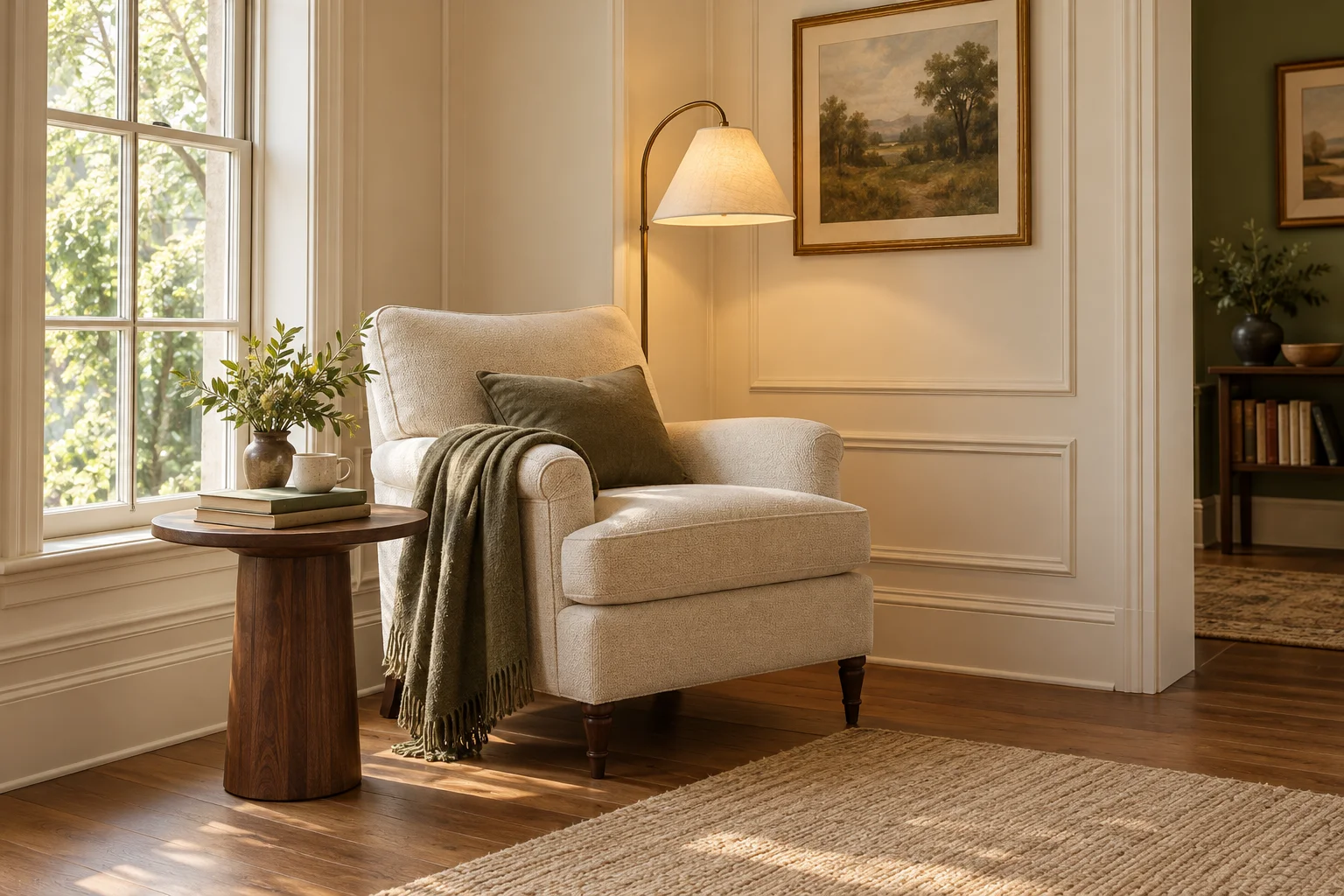
If you are considering a new seat, a design such as the Homary beige velvet upholstered wood accent chair offers a soft neutral finish with a visible wood frame that could suit a warm, restrained room. Treat the shape as a starting point, then check the current dimensions, upholstery details, delivery terms, and return policy before ordering. Comfort is personal, and an attractive photograph cannot tell you how a chair will feel to sit in.
Try the layout with your existing chair first. You will quickly learn whether you need a smaller footprint, more generous arms, or somewhere to put your feet. Those are useful buying criteria if you eventually decide to replace it.
2 Put the light where the pages need it
Daylight can make a corner appealing, but the nook should also work when you are most likely to use it. Visit in the evening with a book and switch on the lamps you already have. Notice whether the page is clear or whether you are leaning forward to find a brighter patch.
A floor lamp beside or slightly behind the chair is a useful option when table space is limited. A table lamp can work just as well if its base leaves enough room for everyday essentials. Move the light until it reaches the pages without leaving a bare bulb in your direct line of sight. Your seated view matters more than the arrangement seen from the doorway.
Test the position while holding a book naturally. A lamp that looks right beside an empty chair may cast a shadow once you sit down. If the shade or light source is adjustable, use that flexibility before deciding the lamp itself needs replacing. Follow the fixture’s guidance when choosing a compatible bulb.
Let a little light remain elsewhere in the room so the corner feels connected to its surroundings. Keep cords clear of walking routes, and do not run them under a rug to hide them. Once the lighting is comfortable, the nook becomes much easier to use on an ordinary weekday evening.
3 Make room for a cup and the book you are reading
A small table has a very practical job here. It needs to hold the things you reach for while sitting, without asking you to stretch across the room. Before buying a new one, try a stable stool, a compact side table from another room, or a sturdy piece already beside the sofa.
Check its position with the chair occupied. Put down a mug, pick it up again, and see whether the movement feels easy. Keep drinks on a stable, suitable surface, with a coaster if the finish needs protection. A beautiful table that sits too far away is likely to become a place for objects you rarely use.
Give the tabletop a little breathing room. The current book, a drink, and your glasses may be all it needs. If a lamp takes up most of the surface, move decorative pieces elsewhere rather than trying to balance everything around its base. Everyday use should be effortless.
For extra books, use a nearby shelf or a small basket that is easy to reach without blocking the walkway. Keep the selection modest. You can change it whenever you finish a book, which gives the corner a lived-in feeling without turning the floor into overflow storage. Leave space for whatever you bring to the chair tomorrow.
4 Add softness in the places you actually touch
A cozy corner usually benefits from a little texture, particularly when it sits against plain walls or beside a hard floor. Start with the chair itself. A throw you enjoy using can soften its outline and make it more inviting on cooler evenings. Fold it over an arm or keep it nearby so it is easy to reach.
Use a cushion only if it improves the seat. A small one may provide welcome support; an oversized one may push you forward and leave too little room. Sit down after every change. It is surprisingly easy to style the comfort out of a chair by filling it with beautiful things that need to be moved.
Let the colors relate to something already in the room. A muted olive throw might echo a painting, while oatmeal or warm brown could connect the chair to an existing rug. A slight variation in texture is often enough to make similar neutrals feel considered. You do not need every fabric to match.
If the main room already has a rug, the chair may simply sit alongside or partly within that arrangement. A separate rug is optional. In a tight corner it can add another edge to step around, so test the available space before introducing one. The goal is a place that feels pleasant to occupy and easy to move past.
5 Give the corner a quiet sense of belonging
Once the seat, light, and table work well, look at the wall around them. A piece of art you already love can help the arrangement feel settled. Position it in relation to the chair and surrounding furniture, checking the view both from the doorway and while seated. There is no need to fill every visible patch of wall.
A plant can add a little life if the corner’s light suits it and you can reach it to water comfortably. Keep leaves clear of the reading light and avoid sacrificing useful table space for a pot. A small branch in a vessel elsewhere in the room can provide a similar visual connection when the nook itself is compact.
Then spend a few evenings using the space before changing anything else. Perhaps the lamp needs moving, the throw is too warm, or the table belongs on the opposite side. These small observations will shape a more personal corner than another round of accessories.
For ideas that carry the same comfortable feeling through the room, see our guide to making a neutral living room feel warm. Keep the reading nook’s finishing touches simple enough that they never compete with its real purpose: a comfortable place to sit, good light on the page, and a little time to yourself.