WESTMONT may earn a commission if you buy through links in this article.
A neutral living room can have a comfortable sofa, a good rug, and freshly painted walls and still feel a little unwelcoming. Perhaps every surface is the same pale shade. Perhaps the gray upholstery looks colder beside a new cream cushion. Or perhaps the room looks lovely from the doorway, but there is nowhere comfortable to settle with a book.
Before adding anything, spend a few minutes in the room. Sit where you usually sit. Notice what feels awkward, what looks flat, and whether the feeling changes after dark. That small diagnosis will help you make a neutral living room feel warm and inviting with fewer purchases and more of the pieces you already own.
Find out what kind of warmth is missing
Warmth can mean several things in a living room. It might be a color problem, a lack of softness, or a seating arrangement that keeps everyone at a distance. Treating all three as a shopping problem can leave you with more cushions and the same uncomfortable room.
Look at one area at a time. If the sofa disappears into the wall behind it, the room may need more contrast. If the furniture feels disconnected, try bringing the seating closer together. If you like the space all afternoon but avoid it in the evening, test the lighting before reconsidering the paint.
Take a photograph from the doorway, then put the phone down and sit in each seat. The photograph helps you compare shapes and colors; sitting there reveals the table you cannot reach or the light shining directly into your eyes. Both views matter.
Work with the undertones already in the room
Beige, gray, white, and brown each cover a wide range of colors. A gray fabric may lean blue or green; a cream may look noticeably yellow beside it. These subtle color casts are often described as undertones. Two pieces labeled “neutral” can still look uncomfortable together.
Begin with the surfaces you are keeping, especially the floor and largest upholstered piece. Bring your existing throws and cushion covers beside them in daylight. Compare them again with the lamps on. A combination that pleases you in both settings is a more useful guide than the color names on a label.
For a cool gray sofa, try a muted oatmeal or gray-brown textile before a strongly yellow cream. A pattern containing both gray and a warmer brown can help the two colors feel related. You can use the same idea with artwork you already own: a print containing slate, cream, and brown gives you several colors to draw from.
If a cream sofa sits on honey-colored flooring, test a deeper taupe or muted olive nearby. More yellow beige may make the whole arrangement feel too similar. You are looking for enough difference to see the separate pieces clearly.
Mixed warm and cool neutrals can work beautifully. Test combinations in the room rather than trying to force every item into one temperature. If you eventually consider new paint, assess a sample beside the furniture at different times of day before committing.
Give pale surfaces some depth
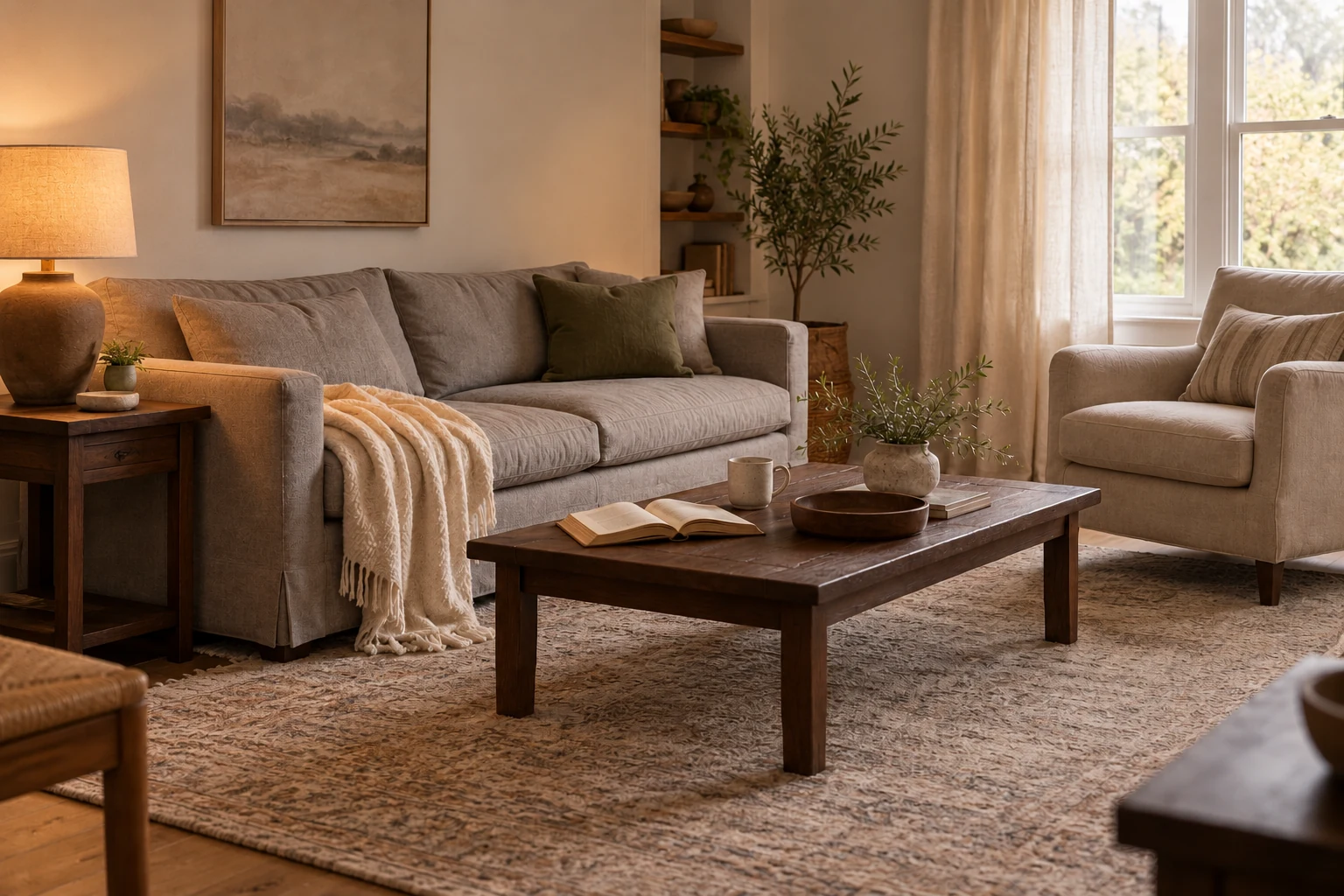
A room full of ivory and oatmeal can feel washed out when everything is equally light. Adding a darker note gives the pale colors something to sit beside. That might be a brown wooden table you already own, a charcoal lamp base, or a dark frame moved from another room.
Start with one substantial piece near the seating and look again from the doorway. Does the sofa have more definition? If the darker item feels stranded, echo its color in one smaller detail nearby. Avoid distributing identical dark accessories across every surface; that can make the room feel overly arranged.
Wood is useful here, but it does not have to mean orange-toned oak or a new matching furniture set. Weathered finishes, medium browns, and darker wood all offer different possibilities. Try an existing wooden stool as a side table, or place a wooden bowl on a glass coffee table to see how the combination feels.
Also consider where the softness sits. A woven basket on a shelf may add visual texture, but it will not make a slippery chair more comfortable. Move a soft throw to the seat where you actually relax. Keep enough cushions for support and leave enough space to sit without dismantling an arrangement.
Arrange the room around a comfortable seat
A welcoming living room should make it obvious where to sit and easy to stay there. Furniture pushed against every wall can leave a large, uninviting gap in the middle, even when each piece is attractive.
Try turning an occasional chair toward the sofa or bringing it a little closer. Keep the route through the room clear and walk it as you normally would, including with a laundry basket or while helping someone move around. In a smaller room, a chair may work better at a slight angle than pulled far into the space.
Then check each seat for practical comfort. Can you put down a cup without leaning awkwardly? Can you reach a lamp? Is there somewhere for the book or glasses you keep using? Swap existing side tables around before deciding you need another one. If a seat still needs a small perch for a cup, Homary’s walnut-veneer drink table brings a deeper wood tone into the arrangement and a compact 9-inch top.
Let useful possessions remain visible. A well-used book, a family photograph, or a piece of pottery with personal meaning can make a restrained palette feel like your home. Group things where they belong in daily life. A blanket tucked into a basket beside the sofa is more inviting when it is easy to reach and pleasant to use.
Check the room after dark
Return to the same seats in the evening. If overhead light makes the room feel stark, try the lamps you own and notice where you still need illumination. A lamp borrowed from a bedroom can help you test a reading corner before you buy anything.
Check the light from a seated position. A visible bare bulb can be distracting even when the rest of the room is dim. Reposition the lamp so its shade screens the bulb from that seat, while keeping enough light for reading or other tasks. Keep cords out of walking routes.
Notice how the textiles look now, too. If one cushion suddenly seems very yellow or pink, move it elsewhere and reassess. Changing a small piece is easier than repeatedly trying to correct the entire palette around it.
Try the changes together before shopping
Imagine a room with a gray sofa, white walls, a pale rug, and a glass table. You might begin by bringing a brown wooden side table into the seating area, testing an oatmeal throw against the upholstery, and angling a chair toward the sofa. In the evening, try a lamp beside that chair. These changes give you something concrete to judge.
Use the room for a few days. You may discover that the missing piece is a reading light, or that a softer cushion would make one chair more comfortable. If you still want to buy something, you can name the job it needs to do.
For broader ideas on proportion and finishing details, read How to Make Your Home Look Expensive Without Overspending.
The room is ready when you can settle in easily, the colors feel comfortable together, and the things you enjoy have a place. Leave space for the book you are reading and the cup of tea beside it.