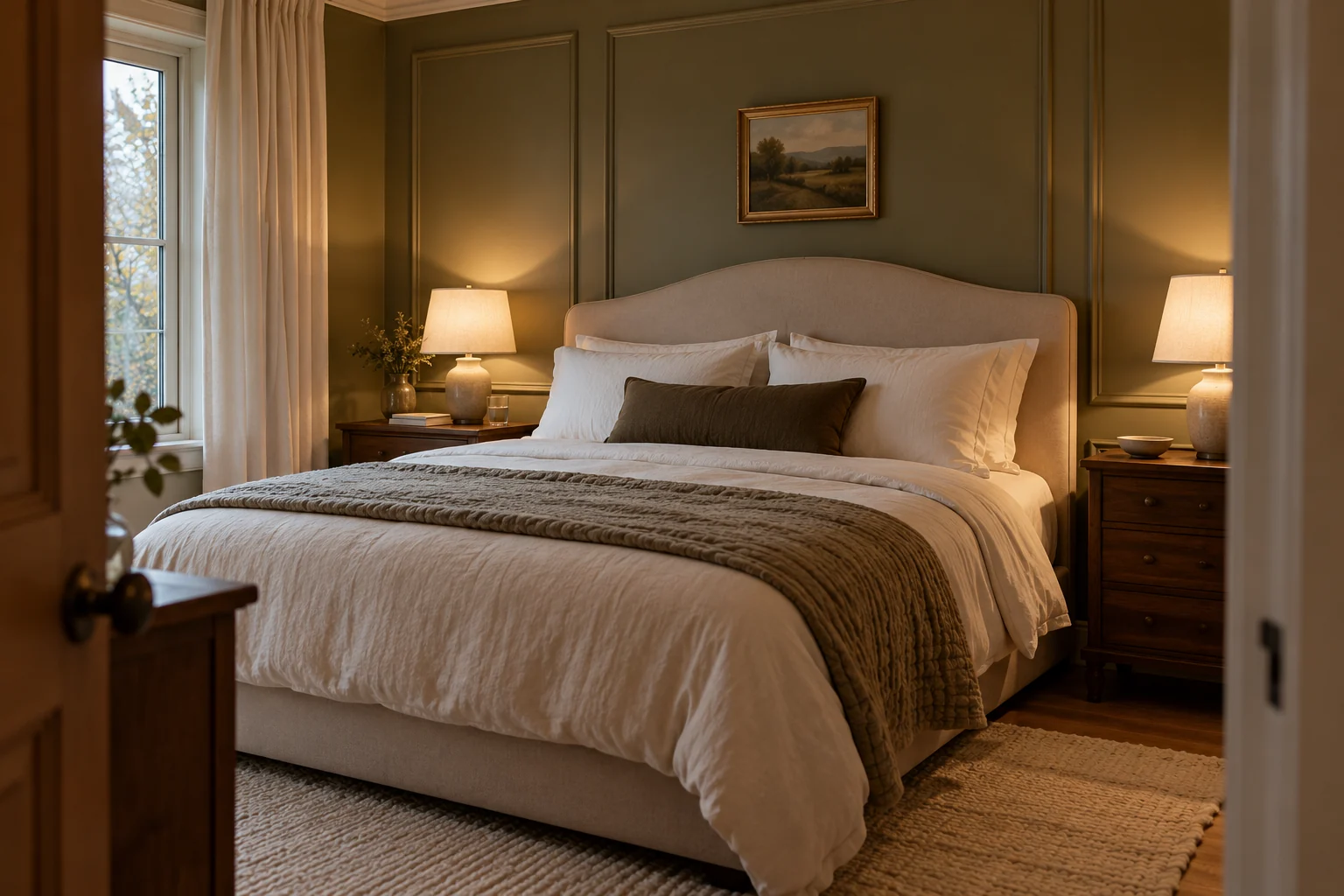
There is a particular pleasure in opening the door to a thoughtfully designed hotel room. The bed looks inviting, a lamp is waiting beside it, and there is somewhere to put down everything you brought with you. Before you have unpacked, the room has made settling in feel easy.
You can bring that feeling into your own bedroom without replacing the furniture or buying an elaborate set of bedding. Focus on the few minutes around getting into bed and getting up again. What do you reach for? Where do your clothes land? What would make the room feel ready for you at the end of the day?
Give the bed a clear presence, make the bedside genuinely useful, and choose finishing touches you can keep looking good on an ordinary morning.
Let the bed set the scene
As the largest piece in most bedrooms, the bed gives you a natural place to concentrate your decorating effort. A neatly dressed bed against a defined backdrop can carry the room while the other furniture stays simple.
If you already have a headboard, let its shape show. Lower the stack of pillows if it hides the detail you like most. With a plain bed frame, a painted wall behind it can create a sense of definition, or you might use one substantial piece of securely hung artwork.
Keep the largest areas of bedding within a narrow palette, then let one darker detail sharpen the arrangement. Warm white sheets and an oatmeal cover might sit against an olive wall, with a deep brown cushion echoing the bedside wood. If you love patterned bedding, draw one quiet color from the print for plain pillowcases and keep the rest of the bed simple. The pattern has more presence when it has space around it.
For more on choosing a focal point and getting proportions right, our guide to making your home look expensive without overspending offers ideas you can use throughout the house.
Make the bedding generous and manageable
A hotel-inspired bed should feel as good when you pull back the covers as it looks from the doorway. Begin with the sheets you enjoy sleeping in and a duvet or quilt that suits how warm you like to be. Choose a care routine you can realistically maintain, especially if the bedding will need frequent washing.
Fit makes a visible difference. Check the mattress depth before buying a fitted sheet, including any topper, and compare the actual measurements of a duvet and cover rather than relying only on size labels. Look at how the bedding falls down both sides of your bed. Enough coverage to conceal the mattress edge gives a more finished appearance, while fabric pooling on the floor makes daily upkeep harder.
Decide whether you prefer a tailored bed or a softer, more relaxed finish. For a crisp look, smooth the main cover and make an even fold across the top, showing a little of the sheet or reverse fabric. If you enjoy softly rumpled bedding, keep those loose textures but give the arrangement one clear line: a neatly folded quilt across the lower third. A contrasting weave makes that layer visible even in a similar color. In warmer weather, the quilt may be all the top layer you need.
Finish with the pillows you sleep on and, if you like the look, one long decorative cushion. Before adding more, decide where they will go at night. A bed that takes two minutes to remake is easier to enjoy every day.
Style the bedside around what you reach for
A good bedside table earns its place after the lights go down. It needs space for your actual evening essentials, whether that means a glass of water, reading glasses, a book, or a phone charger.
Start with those items and the lamp. Leave a clear landing spot large enough to set down a glass without moving anything. A small dish can keep rings or earrings together, but a tray that fills the whole tabletop may make the surface less useful. Put spare cables and less-used items in a drawer or a nearby closed box.
As a starting point, look for a tabletop close to the height of the mattress top. Then test the reach from your normal position in bed. Your arm should find what you need comfortably. The right height for your bed and body matters more than matching a furniture set.
Different bedside tables can work well together. A compact chest on one side and a slimmer table on the other can accommodate an uneven room. Give them similar visual weight with lamps of a comparable overall height, or repeat a shade shape on different bases. Leave some bare tabletop visible on both sides. That balance helps the bed feel framed without requiring identical furniture. On a very narrow side, a securely fitted shelf may provide enough space for the essentials.
Put the light where you need it
Being able to switch off a bedside light without getting up is a small luxury worth planning for. Check the switch position and the distance to a socket before choosing a lamp.
Sit up in bed as you would to read. The shade should screen the bulb from your eyes while the light falls where you need it. A lamp that looks perfectly scaled on the table can still be awkward from the pillow, so assess both positions. If two people share the bed, independently controlled lights let each person use their side comfortably.
Where tabletop space is limited, a wall light may help. A plug-in version avoids the need for a new hardwired point, although it still needs secure mounting and a safe cord route. Keep shades and fixtures clear of bedding, and follow the maker’s installation instructions.
Finish the view from the pillow
Bedrooms are often decorated from the doorway, yet the view you spend time with may be the opposite wall. Lie down and look across the room. An overflowing laundry basket, open wardrobe, or pile of work papers can dominate that view even when the bed itself looks beautiful.
Give the things that accumulate a convenient home. Place the hamper where you undress. Add a hook for the robe that usually lands on a chair. If the bedroom also contains a desk, use a drawer or box to put work materials away together. Make these solutions easy enough to use when you are tired.
Check the window from this position, too. Decide how much privacy and light control you want, then assess the curtains or blind you already have. If considering a blackout option, check how it will cover the window and where light could enter around the edges. Keep fabrics clear of heaters and vents.
Leave space for the morning
A bench at the foot of the bed looks appealing in photographs, but it earns its place only when there is room to use it. Before adding furniture, mark out its footprint and walk from the bed to the door and wardrobe. Open drawers fully. Allow extra space for how you move around, including any mobility needs.
The same practical test applies to a rug. Aim for a comfortable patch underfoot where you get out of bed. Two bedside rugs may suit a compact room better than one larger rug that crowds the furniture. Keep them flat and securely in place, clear of swinging doors.
Keep one personal detail in view: a favorite photograph, a small landscape, or a ceramic piece you enjoy. It gives the room character without asking every surface to become a display.
Spend on the comfort you will notice daily
If the budget is limited, choose the change that will improve your everyday experience most. That might be replacing an uncomfortable sheet, adding a reachable reading light, or solving a window-covering problem. Decorative cushions can wait while those details come together.
Budget for the complete change. Bedding may need matching dimensions rather than matching accessories; lighting may require a bulb or installation; curtains may need hardware. Measuring and checking these details first helps you avoid a purchase that creates another job.
Begin by making the bed, clearing one useful bedside surface, and giving tomorrow’s clothes a place. The most satisfying hotel-inspired bedroom is one you can walk into, settle into, and put back together with ease.