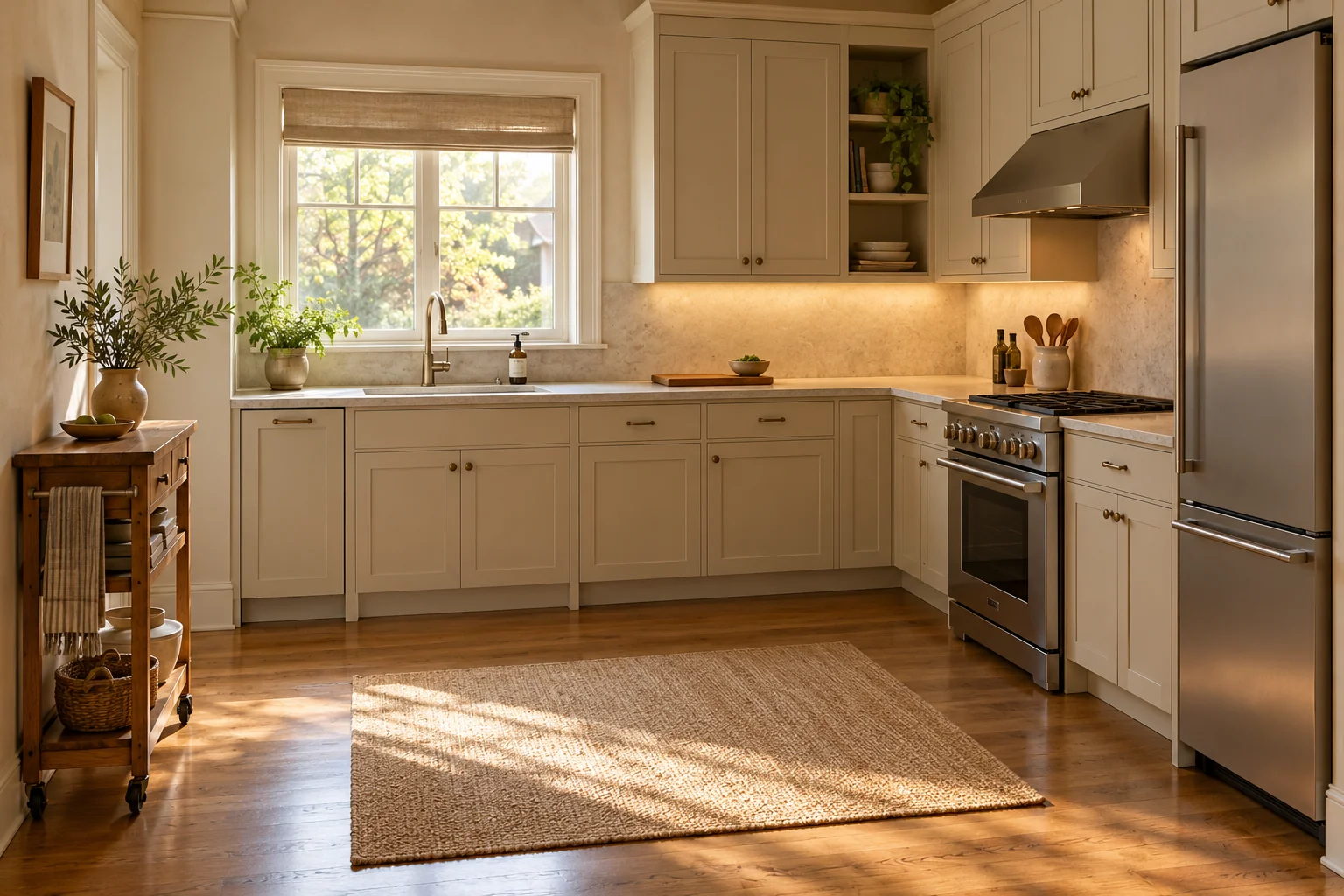
A small kitchen can feel busy before dinner has even started. The chopping board needs the space occupied by the toaster, the saucepan is behind three other pans, and somebody needs the fridge just as you open a drawer. Those little interruptions often matter more than the number of cupboards.
The most useful improvements begin with the meals you actually make. A kitchen used for quick breakfasts and weeknight suppers needs a different arrangement from one where bread is baked every weekend. Watch what you reach for, what you move out of the way, and which surface becomes the unofficial landing place for everything.
You can make daily cooking easier without starting again. These five changes help a compact kitchen offer more useful work space, better storage, and a calmer rhythm, with any new furniture earning its place through careful measurement.
1 Give one stretch of counter a clear job
Choose the surface where food preparation feels most comfortable. Ideally, it is convenient to the sink and cooking area without sitting in the path of an opening appliance. Clear it completely, then put down your largest chopping board and the bowl or tray you normally use beside it. This is the space you are trying to protect.
Return only what you use there regularly. A knife block, blender, kettle, and decorative jar may each seem small, but together they can leave nowhere to work. Keep a daily appliance out if moving it would be a nuisance. Find an easy, reachable cupboard for the one that comes out occasionally, checking its weight before choosing a shelf.
Give unrelated items a different destination. Post, keys, and bags need a home before they reach the kitchen counter. If breakfast equipment keeps spreading into the prep area, gather it in a separate spot that still has a suitable outlet. Our guide to creating a coffee station that looks built in explores that specific arrangement in more detail.
Use the newly cleared surface for an ordinary meal before styling it. You may discover that a small bowl is welcome, while a large tray simply becomes another thing to move. Keep the arrangement that makes the next meal easier.
2 Store things where the work happens
Think in small groups of activity rather than broad categories. The things used to make breakfast belong near the breakfast surface; the tools used at the hob should be easy to reach without leaning over heat. Cleaning items need an appropriate separate home, away from food and inaccessible to children where relevant.
Start with the drawer or cupboard you open most often. Put everyday utensils in the easiest position and move occasional pieces farther back. Keep the spatula you actually like, the reliable peeler, and the measuring tools you use together. A divider helps only after you have reduced duplicates and checked that its compartments fit those items.
Make unloading the dishwasher simpler too. Everyday plates and glasses can sit near it if that location also works for setting the table. Store heavier dishes low enough to lift comfortably. Frequently used items should be within your household’s comfortable reach, rather than high on a shelf chosen for its appearance.
Test each change while cooking. Can you reach the pan without dismantling a stack? Does someone making tea interrupt the main prep space? Adjust one awkward area at a time. A useful kitchen arrangement follows the way people move through the room, and it can change as their routines change.
3 Use cupboard space you can actually reach
A tall cupboard can look full while wasting much of the space between shelves. Before buying organizers, empty one section and measure its usable width, depth, and height. Include hinges, door hardware, and any pipework. The opening may be narrower than the interior, which matters when sliding a basket or shelf insert through it.
Adjust existing shelves first where possible. A closer gap may suit mugs, while a taller section can accommodate a jug. Stand baking sheets and chopping boards in a stable divider if the cupboard allows it, so each one can be lifted out separately. Keep lids with the pans they serve or in a nearby holder that does not catch the door.
Use the back of a deep cupboard for things you need less often. A handled bin can make a small group easier to retrieve, provided it is light enough to move and does not hide items behind it. Avoid making a heavy pull-out box that needs two hands to lift across the kitchen.
Leave some room for change. Storage that only works when every container is arranged perfectly soon becomes frustrating. Before adding door-mounted racks or a new shelf, check the fixing method, load limit, and clearance with the door closed. The best improvement is the one you can keep using without a daily rearrangement.
4 Add a cart only when the room can spare the floor
A compact cart can provide an extra surface or a home for a few useful items. It can also turn a workable kitchen into an obstacle course. Start by measuring the space you already use, including the routes to the fridge, sink, cooker, and doorway, with appliance doors and drawers fully open.
Mark the complete proposed footprint on the floor with paper or floor-safe tape. Include handles, overhangs, and any leaf in its open position. Walk around it while someone else works at the counter. Check the arrangement with the people and mobility aids that use the room. A piece that fits on a floor plan may still make passing or bending uncomfortable.
A rolling piece needs a real parking place as well as somewhere to be used. Keep it away from heat, leave appliance ventilation clear, and follow the maker’s guidance for locking wheels and surface use. Do not assume a top is suitable for direct chopping or hot cookware. If comfortable movement disappears when the footprint is marked out, keep the floor open and improve the existing worktop instead.
5 Make the evening reset easy
A well-used kitchen will never stay completely clear throughout the day. Give it a simple finishing routine that prepares it for the next meal. Put ingredients away, return tools to their assigned places, and clear the main prep surface. Anything repeatedly left out is a clue that its storage is awkward or too far from where it is used.
Look at the lighting while you work, rather than only from the doorway. A ceiling light behind your shoulders can leave the counter in shadow. Properly specified under-cabinet lighting may help illuminate that surface without adding anything to it. Choose fittings suitable for the location, follow installation guidance, and use a qualified professional where the work requires one.
Keep the visual finishing touches useful and restrained. A folded tea towel, a wooden board, or one piece of pottery can bring warmth to cream cabinetry without occupying the whole counter. Repeating one wood tone or a quiet olive accent is often enough to connect the kitchen with the rest of the home. Our guide to making your home look expensive without overspending offers a wider approach to those considered details.
Finish with tomorrow in mind. Set the kitchen up so the first task feels straightforward, whether that is making breakfast or preparing lunch. When the counter has a purpose, the right tools are easy to reach, and the floor remains comfortable to move through, a small kitchen can support a surprisingly generous amount of everyday life.