WESTMONT may earn a commission if you buy through links in this article.
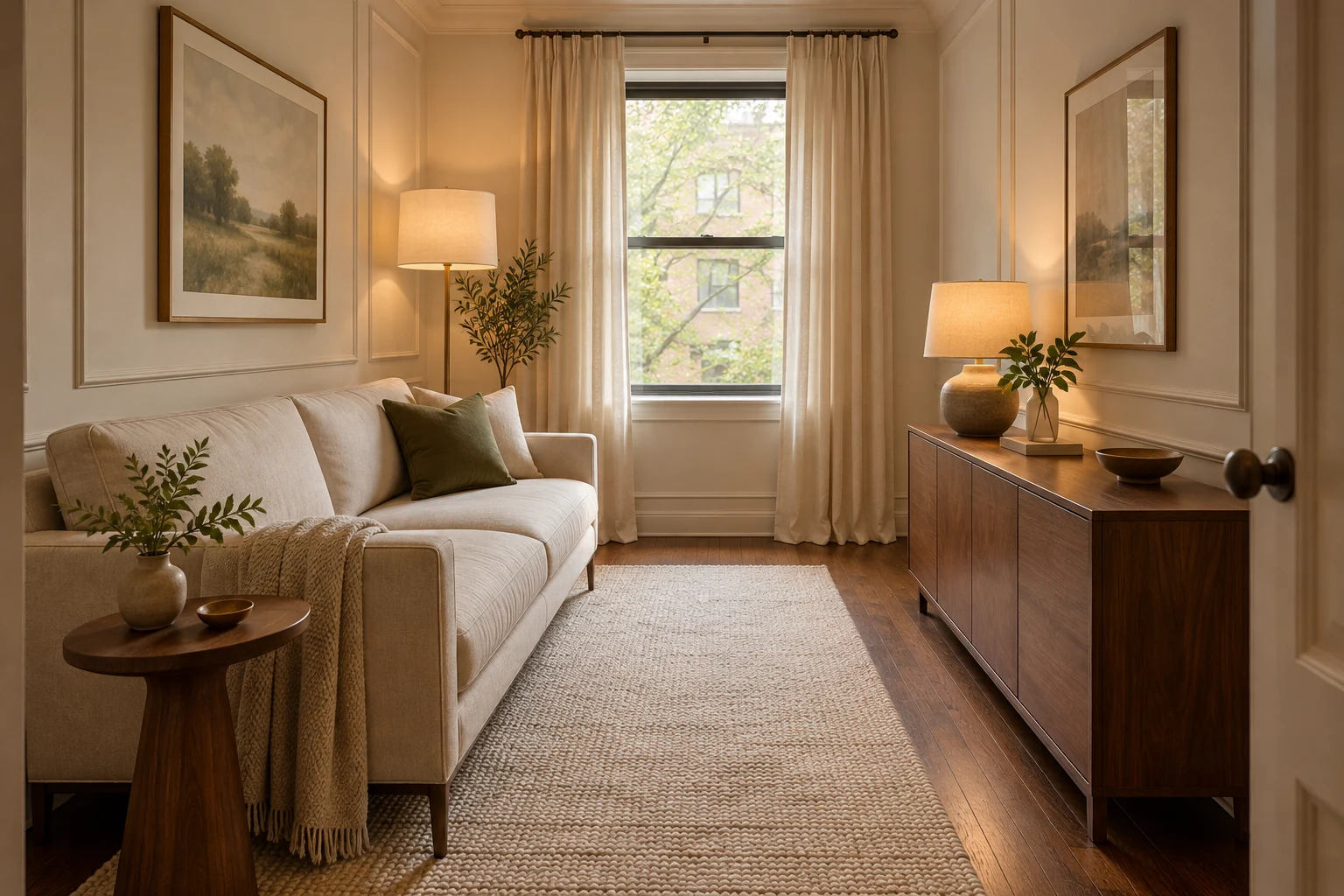
A small living room asks a lot of its furniture. The sofa has to be comfortable, the storage has to absorb everyday belongings, and there still needs to be room to cross the floor. When those jobs compete, even beautiful pieces can make the space feel crowded.
An expensive-looking room usually has a sense of ease. Furniture fits its surroundings, useful surfaces stay available, and a few details receive your attention. You can work toward that feeling without buying a complete new scheme. Begin with what interrupts daily life: the chair you squeeze past, the pile beside the sofa, or the table that holds everything except your cup.
These five changes make compact rooms feel more considered while keeping them comfortable to use.
1 Choose furniture with useful proportions
Small-room furniture is often judged by its width, but depth and usable seating matter just as much. A sofa with thick rolled arms can occupy a surprising amount of floor while offering relatively little space to sit. A slimmer arm may leave more room for a person within a similar overall width. Compare the seat dimensions as well as the outside measurements.
Start with the sofa you already own. If it is comfortable and sound, see what happens when you remove the least-used companion piece. A sofa and one good chair may serve your household better than a loveseat, two occasional chairs, and several little tables. Keep the seats people actually use; borrow a dining chair when extra company comes.
If replacement is necessary, check how the sofa feels when you sit and stand. An unusually low back or shallow seat can photograph neatly but be wrong for the person using it. Exposed legs can reveal more floor, although a room full of delicate legs can become visually busy. Balance one substantial upholstered piece with simpler supporting furniture.
Before ordering, map the complete footprint with paper or floor-safe tape, including any chaise or reclining mechanism. Check delivery access too. Spending on the piece that fits and feels right is more satisfying than replacing several undersized compromises later.
2 Keep the layout open where it matters
Work out the route people take through the room before deciding where each table belongs. In a compact space, a chair set diagonally can consume more useful floor than expected. Try it square to the wall first, then turn it only as much as conversation or the view requires.
Let the sofa sit against a wall if that gives the room a comfortable route. Pulling every piece forward can waste space you need elsewhere. Check the arrangement with someone seated, a cupboard open, and the coffee table in use. Leave the room your household needs to move safely, including space for any mobility aids.
Choose occasional tables by their job. If one armchair only needs somewhere for a drink, Homary’s walnut-veneer drink table is one compact option: its 9-inch top and 20-inch height make it worth measuring beside that seat. Keep it out of the walking route and check the reach over the arm. A perch this small is suited to a cup, rather than the books, snacks, and shared use a coffee table may need to accommodate.
Once the layout works, give the seating a coherent base. Our guide to choosing the right living room rug size explains how to measure the finished arrangement. Avoid shrinking the rug simply because the room is small.
3 Put everyday clutter behind an easy door
Closed storage earns its place when it makes tidying almost effortless. Before buying a cabinet, gather what regularly lands in the living room and measure the awkward items. A games console, stack of board games, or folded blanket may need more depth than an attractive shallow cupboard provides.
Give these belongings a home close to where they are used. Remotes can go in a drawer within reach of the sofa. A lower cabinet beside the seating can hold throws. If a storage ottoman replaces a coffee table, check that its lid opens without moving nearby furniture, and decide where drinks will sit while it is open.
Use the storage you have first. Clear one shelf inside a media unit and fit a simple divider or box to stop small objects spreading. Group cables behind the unit where practical, following the equipment’s ventilation guidance. Chargers and power strips should remain accessible and safely arranged, rather than stuffed beneath upholstery to hide them.
The outside matters too. One cabinet with quiet, continuous fronts can look calmer than several open cubes filled with different baskets. Leave enough room for doors and drawers to open fully, and follow the maker’s anchoring instructions. Finish by putting the day’s belongings away once. Anything still stranded needs a better home, not another decorative container on the tabletop.
4 Layer the light without filling the floor
A compact room rarely needs a lamp in every corner. Think about where light is useful and where it helps you see the room comfortably. A shaded lamp near the sofa can support an evening conversation; a more directed light can serve the chair where you read.
Begin by using those lights separately from the ceiling fixture. Notice whether the far side of the room disappears into darkness or whether one bright bulb dominates the view. Move an existing lamp onto a cabinet before buying another table to hold it. A wall light can free a surface, but installation, cable routing, and the reach of its arm all need planning.
Pay attention to the whole lamp’s footprint. A narrow base with a wide shade still needs clearance, and an arc lamp may project into the route above shoulder level. From each seat, check that the shade screens the bulb without leaving the task below it dim. Keep cords away from places people walk.
For a cohesive evening feel, compare the bulbs you already have and try similar warm light in the lamps used together. Use compatible dimmers where available. The aim is enough light for the way you live, with softer transitions between bright and dark areas. Two well-placed lights may do that more gracefully than several additional fittings.
5 Give the best details room to be seen
Styling begins with the surfaces you still need to use. Clear the coffee table, then return the things that belong there. A low bowl or a small stack of books can be enough; leave a generous patch for an actual cup or the activity you enjoy in that seat. If every evening starts with moving accessories, reduce the arrangement.
Look at the wall above the sofa in the same way. One artwork with a frame that suits the room can create a clear focus. A collection can work too, especially when related frames and deliberate spacing give it a readable outline. Arrange paper templates first so you can judge the grouping without making unnecessary holes.
Keep textiles comfortable and purposeful. Retain cushions that support you, fold the throw where it is easy to reach, and remove extras that end up on the floor. Repeat a color or material you already like instead of introducing a new finish with every accessory. If the edited room starts to feel too bare, our guide to making a neutral living room feel warm offers ways to build softness and depth.
Live with the changes before adding anything else. The room should still work with a book left open and someone’s feet up. When furniture fits, belongings have a home, and the lighting makes the space pleasant to use, the few pieces you keep can quietly carry the room.